Nobody Wants Your Documentary: Why the 2-Minute Video Rule Wins Every Time


In a busy world, brevity isn’t just polite, it’s a competitive advantage.
There’s a weird thing that happens to smart professionals when a camera turns on.
Suddenly, we feel this massive pressure to do a brain-dump. We think that to prove our value as a lawyer, advisor, or consultant, we need to deliver a comprehensive, A-to-Z dissertation on the topic at hand.
So, you plan a 15-minute deep dive. You sweat over the outline. You finally record it. You send it out. And then… crickets.
Here’s the harsh reality check: Your clients are drowning. Their inboxes are full, their slack notifications are dinging, and their patience is thin. When you send them a 15-minute video, you aren’t giving them a gift; you’re giving them a homework assignment.
And nobody likes homework.
If you want to build trust in today’s attention-deficit economy, you have to stop wasting people’s time. It’s time to embrace the “2-Minute Rule.” Here is why shrinking your videos will actually expand your influence.
The “Kitchen Sink” Problem
The biggest mistake smart people make on video is trying to say everything.
You start talking about “Estate Planning,” and suddenly you’re twenty minutes deep into tax code nuances that only three people on earth care about. It’s too broad, it rambles, and the actual helpful advice gets buried under a mountain of context.
The 2-Minute Rule forces a beautiful constraint: One video, one tiny idea.
Stop trying to cover “The State of Commercial Real Estate in 2024.” Instead, record a 90-second video answering this and only this: “Do I really need that extra office space now that everyone is hybrid?”
Cut the preamble. Skip the fifty-dollar industry words. Get straight to the point. It’s infinitely more watchable.
Don’t Be the Guy at the Cocktail Party
Think about how relationships work in real life. You don’t win a client’s trust by ghosting them for six months and then trapping them in a corner at a conference to yammer on for four hours about your methodology.
You win trust through small, helpful interactions over time. Video is the same.
A strategy that relies on giant, heavy-lift video productions is doomed to fail because you’re too busy doing actual work to sustain it. You might make one. You definitely won’t make the second one.
Showing up every week with a two-minute nugget of genuine value beats showing up once a quarter with a deluge of information that nobody asked for.
If You Can’t Say It Simply, You Don’t Know It Well Enough
It actually takes guts to be concise.
“If I am to speak for ten minutes, I need a week for preparation; if for fifteen minutes, three days; if for half an hour, two days; if for an hour, I am ready now.”
— Often attributed to Woodrow Wilson
When you ramble on for ten minutes, it’s often because you’re trying to find your point while you’re talking. It signals insecurity. You’re hedging.
When a client clicks play and sees the video is only 1:45 long, they feel immediate relief. “Oh thank god, this won’t take all day.”
When you can deliver a sharp, articulate insight in that tight timeframe, you subconsciously signal mastery. You’re demonstrating that you understand their problem so well you don’t need forty minutes of runway to explain it.
How AnswerStage Stops the Rambling
Ironically, keeping things short is way harder than just turning on the camera and riffing. When I stare at a lens without a plan, I will absolutely wander off on three different tangents and repeat myself twice.
We designed AnswerStage specifically for the 2-Minute Rule.
We knew that professionals didn’t need help talking; we needed help shutting up once we made our point.
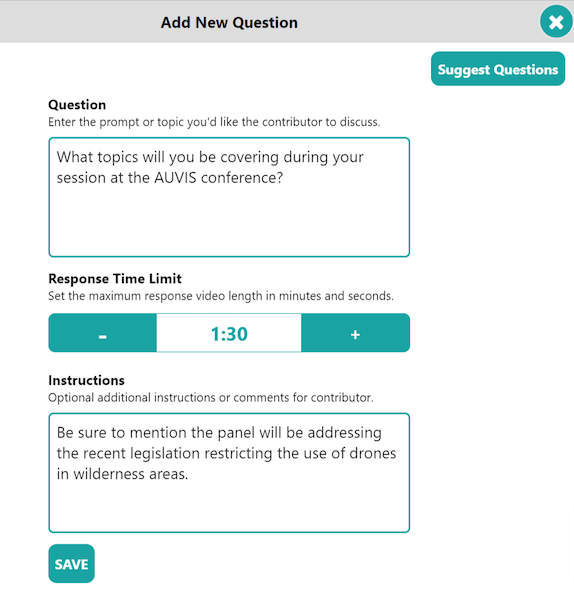
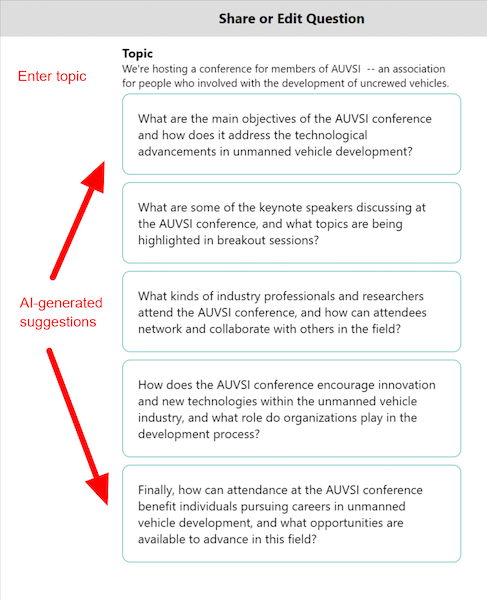
AnswerStage’s SmartPrompter acts as editorial guardrails. It forces you to organize your thoughts into a tight narrative—hook, context, insight, boom, you’re out—before you ever hit record. It ensures that when the camera rolls, you stay focused, stay authentic, and most importantly, stay under time.
The Takeaway
Stop waiting until you have the mental bandwidth to create a cinematic masterpiece. Your audience doesn’t need perfection; they just need an answer to their question.
Look at the sticky note on your desk with that thing you had to explain three times yesterday. Turn on your camera, give the two-minute answer, hit send, and get on with your day.